
08 May Insights to the history of the BIAFD
Its origins… in the words of its founders
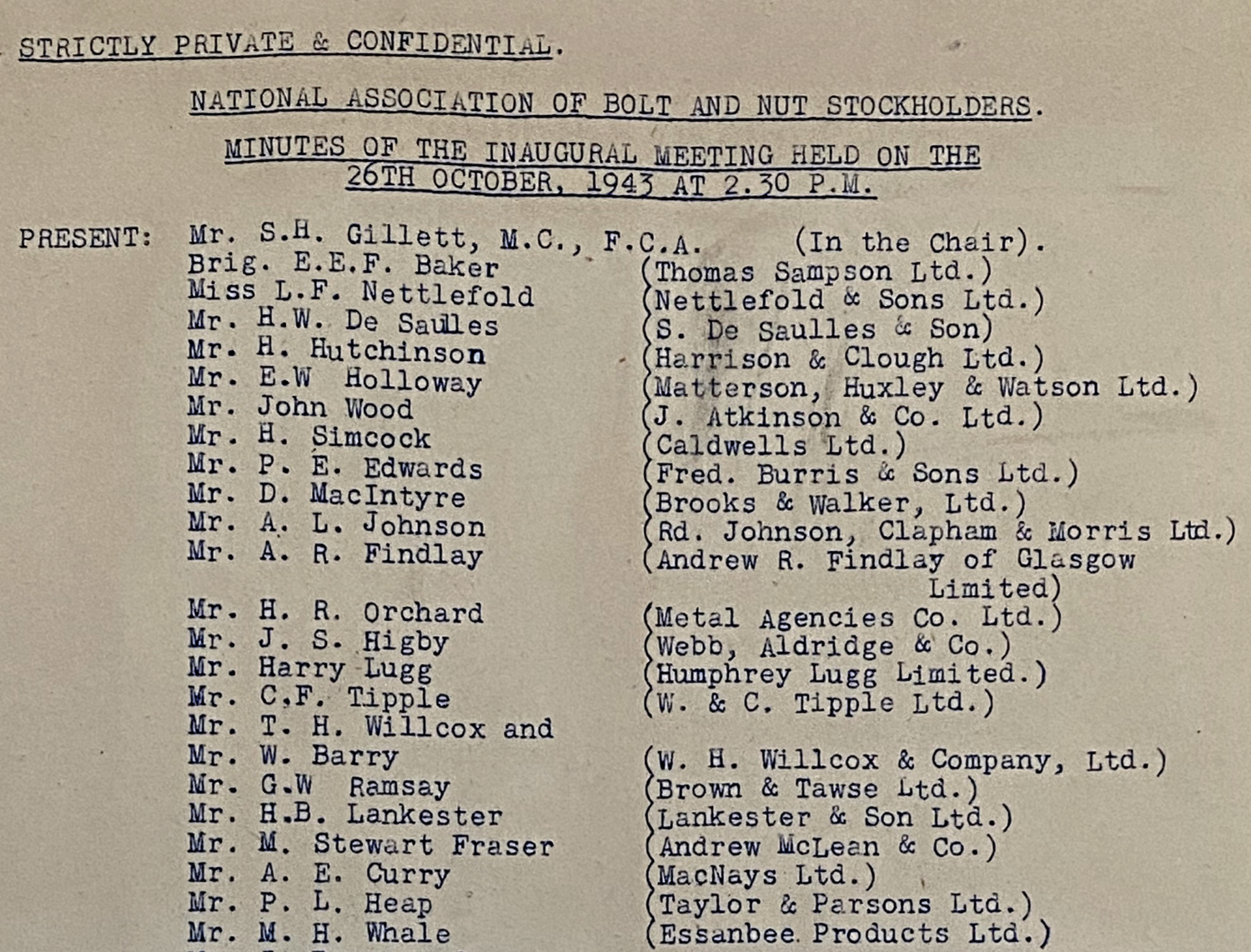
BIAFD has recovered minute books starting in 1943, when its original predecessor was formed as the National Association of Bolt and Nut Stockholders (NABNS). We are currently creating a digital archive to preserve an extraordinary record of the fastener distribution sector and make it available to members. The first minute book, covering from 1943 to 1947, has now been archived, into seventy PDFs, recording minutes, financial reports and membership lists.
Britain and the fastener industry were, of course, very different places in 1943. By then the tide of the Second World War was beginning to turn. Russian forces were driving the German army from Ukraine. German forces had surrendered to the Allies in North Africa. Mussolini had been arrested and executed, and Allied forces had invaded the south of Italy. Allied bombing raids on German cities intensified killing many and inflicting major damage on industry. The war, though, was far from over.
At home, most household items were rationed or in short supply. Traditionally the heart of the British fastener industry, the West Midlands had suffered heavy bombing in previous years. Its fastener manufacturers dominated the supply chain. The Ministry of Supply controlled supplies to industry, including fasteners, with each commodity having a controller determining price levels. There was an extensive network of fastener stockists and distributors throughout the UK, sourcing from domestic factories and supplying, as now, an extensive range of industries and consumers.
On 25th August, the formation of the National Association of Bolt and Nut Stockholders was proposed. Initially the formation met concern and, at some points, outright resistance from manufacturing and hardware bodies. However, on 26 October 1943, the inaugural meeting of the NABNS was held, its Rules confirmed and its Founder Members listed.
The following documents are available to download and read. Each provides a fascinating insight to the fastener industry and the conditions under which it operated at the time. It also provides a key point in the history of many fastener companies that continue to trade today… and many more that have long since disappeared.